Create a Wallet
Understand what must be recorded during wallet creation and why the backup should be completed before regular use.
Read guide →
imtoken · Web3
From multi-chain assets and network selection to transfers and receipts, imtoken helps you connect DApp activity, token approvals, confirmations and wallet security. Review the network, address and request details before each on-chain action.
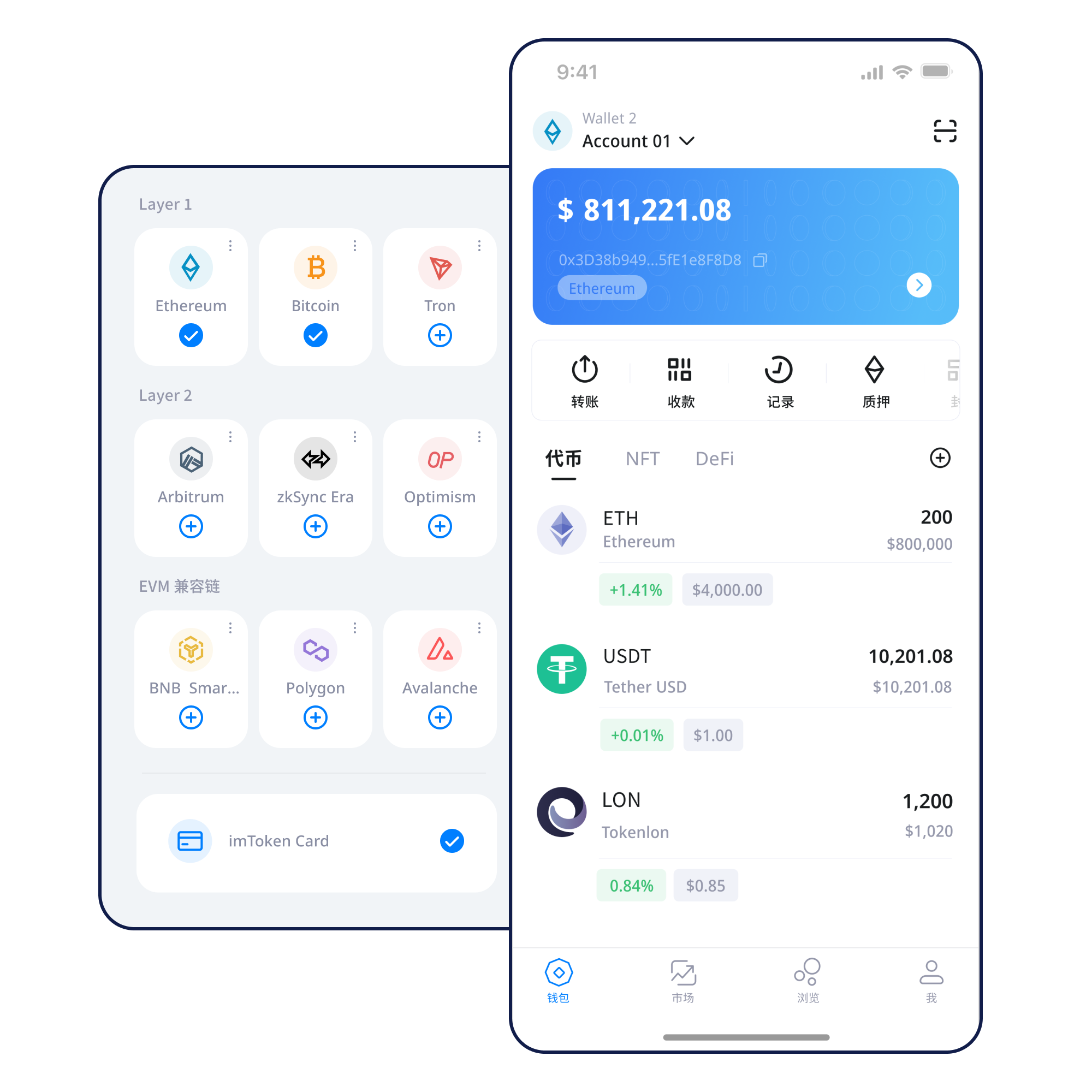
Common wallet tasks look simple, but reliable actions depend on networks, addresses, backups and state verification. Start from the task, then follow the relevant guidance.
Understand what must be recorded during wallet creation and why the backup should be completed before regular use.
Read guide →Keep the seed phrase offline and avoid screenshots, cloud sync or sharing recovery information with anyone.
Read guide →Confirm the network before copying a receiving address, then use the transaction hash to verify the on-chain result.
Read guide →Check the address, network, amount and gas before sending to reduce the risk of irreversible mistakes.
Read guide →Verify the domain and account request, then review every signature and approval independently.
Read guide →Assets, networks, transactions, Web3 and security are not isolated features. Together they determine whether a wallet action can be understood and verified.
Different networks maintain their own state, fee rules and confirmation behavior. Start by identifying the network, then verify receiving addresses, confirmations and explorer records.
Verify address and network when receiving, then amount and gas when sending. Use the transaction hash to see whether a transfer is pending, successful or failed.
Understand transfers →View assets, manage networks and follow transaction history on mobile while keeping seed phrases and private keys under your own control.
Browser connections make it easier to review account requests, access DApps and manage connection state. Each signature and approval still deserves an independent review.
Explore Web connections →
Back up seed phrases offline, never disclose private keys, review approvals periodically and be cautious on shared devices.
The same address format can appear on multiple networks. Read network, fee, block confirmation and contract context together to understand where a transaction actually happened.
Multi-chain management starts by distinguishing networks, not just token names. Network choice affects address context, gas assets, explorers and settlement.
Read more →Public chains use distributed nodes to maintain blocks and transaction state. A transaction progresses from broadcast to inclusion and then accumulates confirmations.
Read more →
EVM networks share a similar execution model and address format, but each chain has independent state, gas assets and contracts. Compatibility is not the same as cross-chain transferability.
Read more →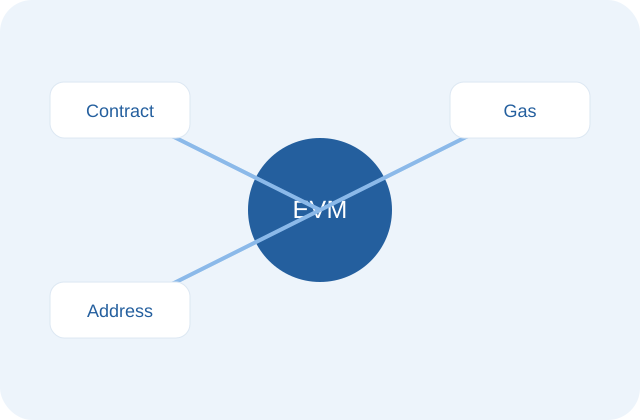
Layer 2 systems use different approaches to scale while relating back to a base layer. Cross-layer activity can involve bridges, waiting periods and multiple confirmation stages.
Read more →
Every step includes something worth verifying deliberately.
Use a trusted entry point to reach the download page and continue only after a deliberate user action.
Create or import in a private environment and never expose recovery information to other people.
Keep the seed phrase offline, never disclose the private key, and never send a recovery phrase to supposed support.
Similar address formats do not mean the networks are the same; verify both the source and destination network.
Verify the address, amount and gas before confirming, then keep the transaction hash to check status.
Review every DApp request before signing and periodically remove approvals that are no longer needed.
Web3 & DApps
DApp connection, message signing, transaction signing and token approvals represent different permissions and consequences. A successful connection does not make later requests automatically trustworthy.
Security
Wallet security starts with control: keep seed phrases and private keys to yourself, verify address, network and amount before transfers, understand DApp requests before signing, and review approvals that are no longer needed. Shared devices, public networks and remote-access situations call for additional caution. On-chain transactions generally cannot be unilaterally reversed by a wallet, so pre-confirmation checks matter.
Open Security CenterAcademy
Start with addresses, seed phrases and private keys, then move to networks, gas, transaction hashes, DApps and approvals. Learning them as one practical workflow makes it easier to know what can be public, what must remain private and where to look first when something goes wrong.
Start learning →Understand the concept through its practical role in wallet use.
Understand the concept through its practical role in wallet use.
Understand the concept through its practical role in wallet use.
Understand the concept through its practical role in wallet use.
Understand the concept through its practical role in wallet use.
Understand the concept through its practical role in wallet use.
Understand validators, reward sources, exit mechanics and risk without replacing mechanism with return promises.
Ethereum PoS relies on validators for block proposals and attestations. Reward sources, network conditions, withdrawals and exits can change with protocol conditions.
Learn the staking mechanism →Staking does not guarantee returns. Rewards can vary, exits can take time, validators can face network penalties, and smart-contract, third-party and market risks remain.
Understand validators →Focused on information that can affect real actions, without invented dates, partnerships or market metrics.
Quick answers across wallet credentials, networks, transactions, Web3 and staking.
Both are sensitive credentials. A seed phrase can commonly recover a set of accounts, while a private key controls a specific account. Neither should be sent to anyone.
Similar addresses can exist on different networks, and assets can be represented by different contracts. Verifying both networks reduces transfer mistakes.
Gas measures network computation used by transactions or contract calls. The actual fee can vary with network conditions and transaction complexity.
Not necessarily. Connecting, message signing, transaction signing and token approvals are distinct requests and should be reviewed separately.
On-chain transactions generally cannot be reversed unilaterally by a wallet. Verify address, network and amount first, then check status using the transaction hash.
No. Rewards can change, exits may involve queues, validators can face network penalties, and smart-contract and market risks still apply.
Use the single download entry point and keep verifying network, address and security details before and after setup.